L’ART S’AFFICHE x Technopôle Angus
David Lafrance
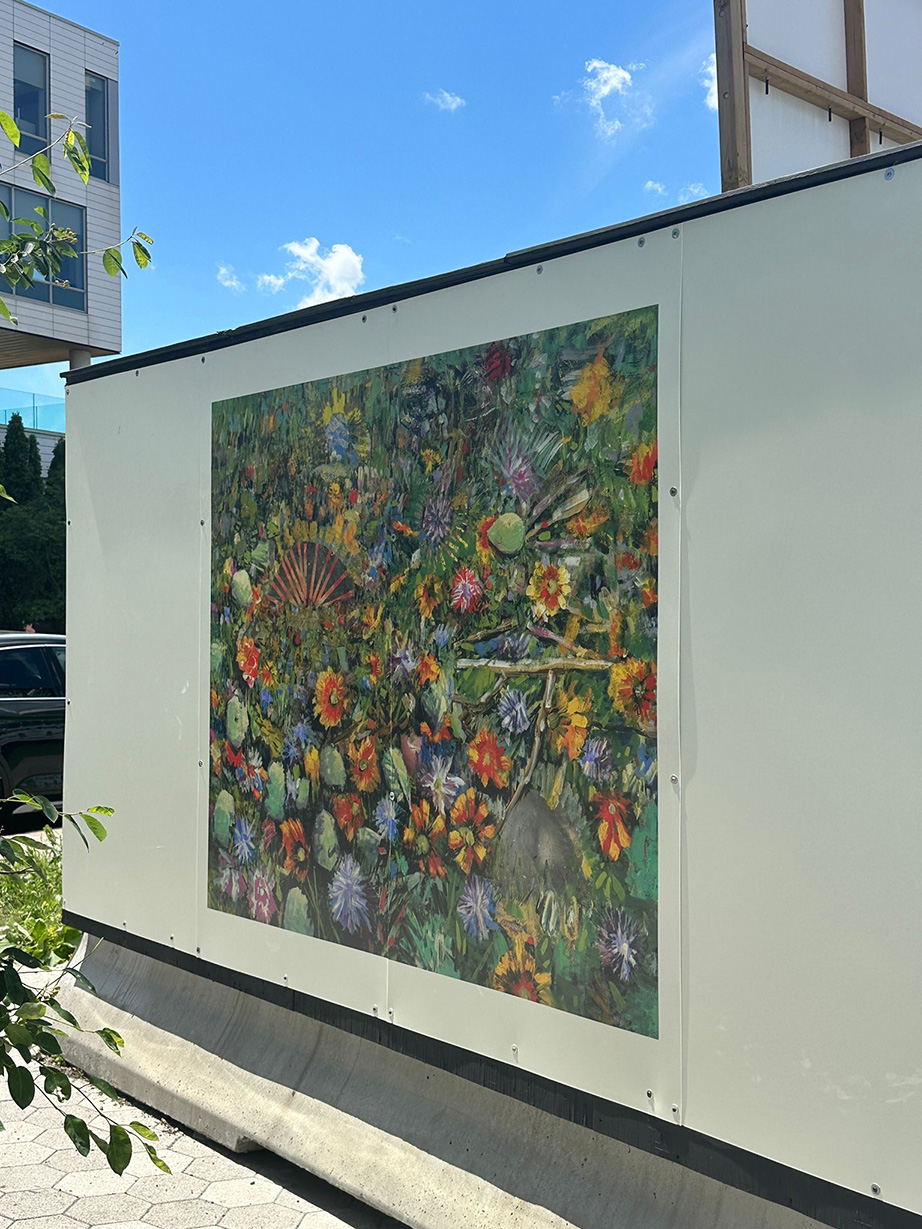
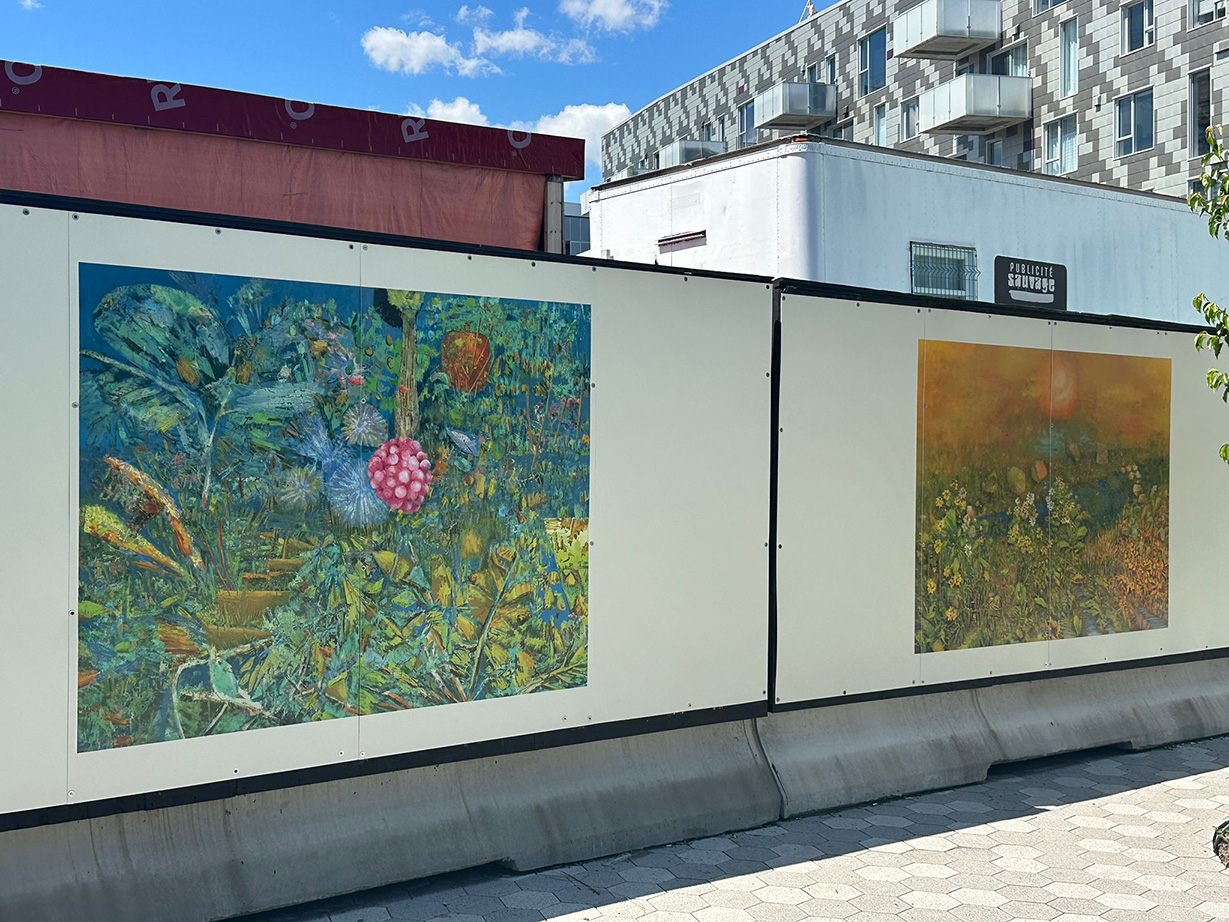
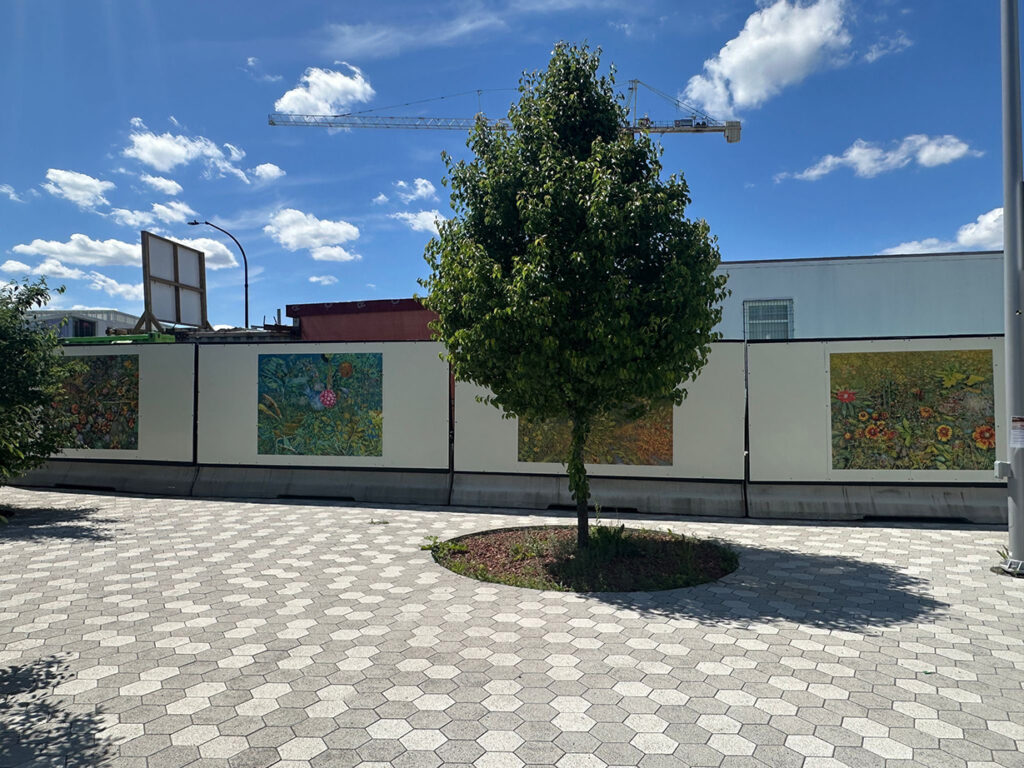
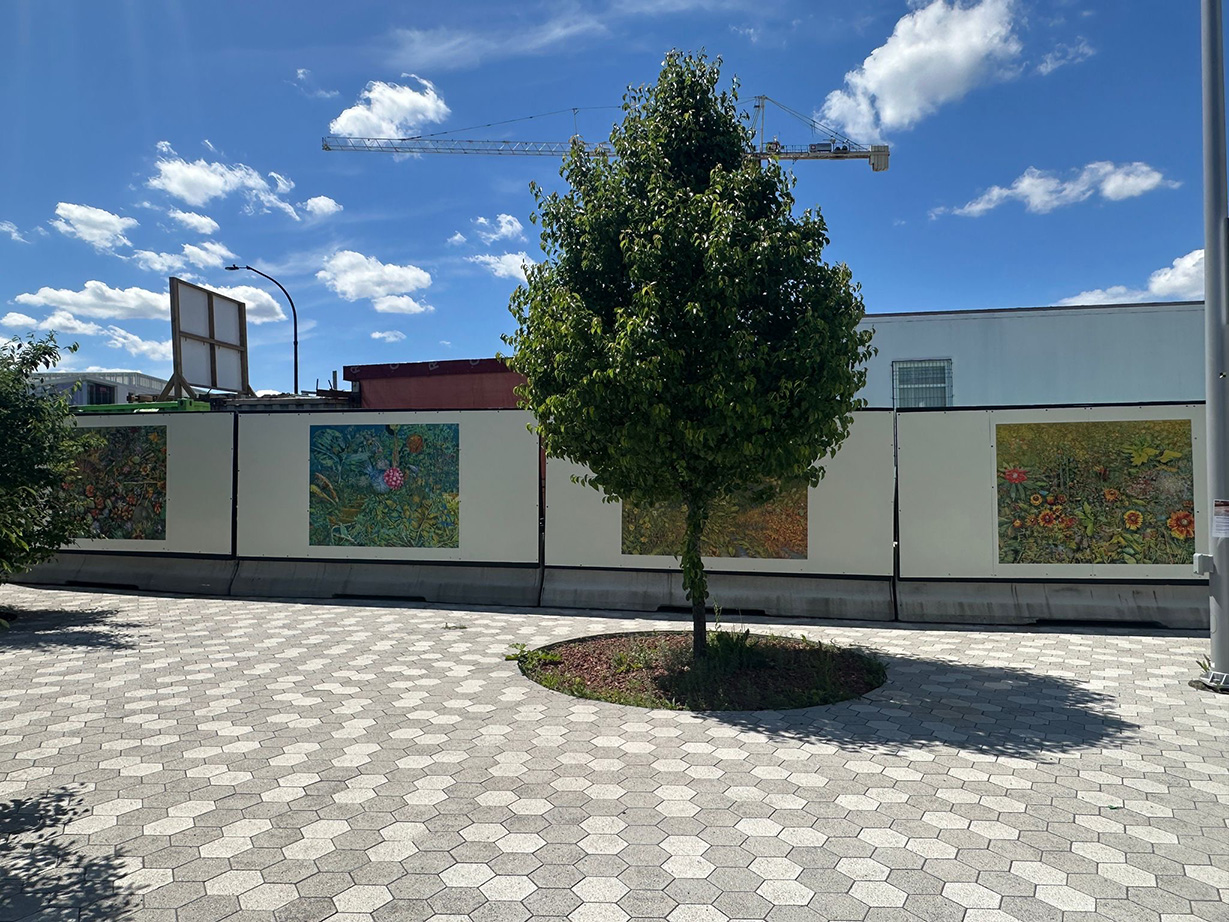
This new L’art s’affiche exhibition showcases artist David Lafrance‘s series of painting questioning the possibilities of landscape painting in the age of ecological crisis. Discover it on the fence surrounding the Place Michel Hébert, at the corner of Molson and William-Tremblay streets.


L’art s’affiche is a public display project, with the objective of making contemporary art accessible while visually energizing the urban space. Emerging and established artists, from multiple practices, are selected and invited to exhibit their works in an unexpected environment.
David Lafrance
Biography
David Lafrance (b. 1976) completed a master’s degree in visual arts at Concordia University. His work has been featured in numerous exhibitions and biennials in Canada, the United States, and France. Recent solo exhibitions include presentations at Salle Alfred-Pellan at the Maison des arts de Laval (2024), Maison de la culture Marie-Uguay (2018), Galerie Hugues Charbonneau (2014, 2016, 2018, 2021, and 2025), CEAAC (2015) in Strasbourg, L’Œil de Poisson (2014) in Québec City, and the Musée régional de Rimouski (2012). He has also participated in various group exhibitions, notably at Stewart Hall Art Gallery (2021), Musée d’art contemporain des Laurentides (2018), Montreal Museum of Fine Arts (2015), L’Œil de Poisson (2015), Art Action Actuel in Saint-Jean-sur-Richelieu (2013), and Centre d’art L’Écart in Rouyn-Noranda (2013). His work is included in several collections, including those of the Musée national des beaux-arts du Québec, the Musée d’art contemporain de Montréal, the Caisse de dépôt et placement du Québec, Hydro-Québec, Desjardins Group, as well as the cities of Montreal and Laval.
Artist statement
David Lafrance approaches painting as a space for reflecting on our relationship to landscape in the era of climate change. At a time when nature is both overexposed in the media and threatened in its integrity, he chooses proximity and coexistence with it. For the past four years, the artist has been cultivating a topographic garden that recreates, on a small scale, the geography of his region. Since then, all of his paintings have been inspired by this microcosm and its immediate environment. His work no longer seeks to represent nature as a backdrop, but rather to bear witness to its vitality, resilience, and unpredictability. His garden quickly escaped any form of control: invasive species, the unpredictable growth of plants, and the presence of animals have disrupted the original mapping. The abundance of living forms has become the painter’s primary material, thereby breaking with the codes of domination or nostalgia traditionally associated with landscape painting in the Western tradition.
His recent work thus questions the possibilities of landscape painting in the age of ecological crisis: how can nature be represented without fixing it in place? How can it be conveyed without possessing it?